
Büttner Ltd. has been participating in domestic and international trade shows for nearly twenty years. Their experience in precision machining, additive manufacturing, and the defense industry clearly demonstrates the role these events play in networking, business development, and keeping up with technological trends. We asked a company representative about their experiences during this year’s exhibition season, the business significance of the exhibitions, and current trends in the industry.
Editor’s note: Büttner Ltd. is a member company of the Southwest Hungarian Engineering Cluster. The cluster’s goal is to showcase its members’ professional expertise and best practices. This time, we asked Büttner Ltd. employees about their experiences at domestic and international trade shows.
Büttner Ltd. maintains a deliberate and regular presence at domestic and international exhibitions. What is the rationale behind this, and how did this process begin? Do you view it primarily as a marketing, sales, or networking tool?
For us, exhibiting has been a strategic networking and business development tool for many years. Based on our experience in recent years, a personal presence is exceptionally important in the fields of precision machining, the defense industry, and additive manufacturing technologies.
We have been participating in domestic and international trade events for nearly twenty years. Initially, these participations primarily served to enhance our professional visibility; today, however, they play a much more complex role: they support sales, the building of partnerships, integration into international supplier networks, and the monitoring of technological trends.
One of the greatest advantages of trade shows is the ability to establish personal connections with decision-makers, developers, and potential partners in a short period of time.
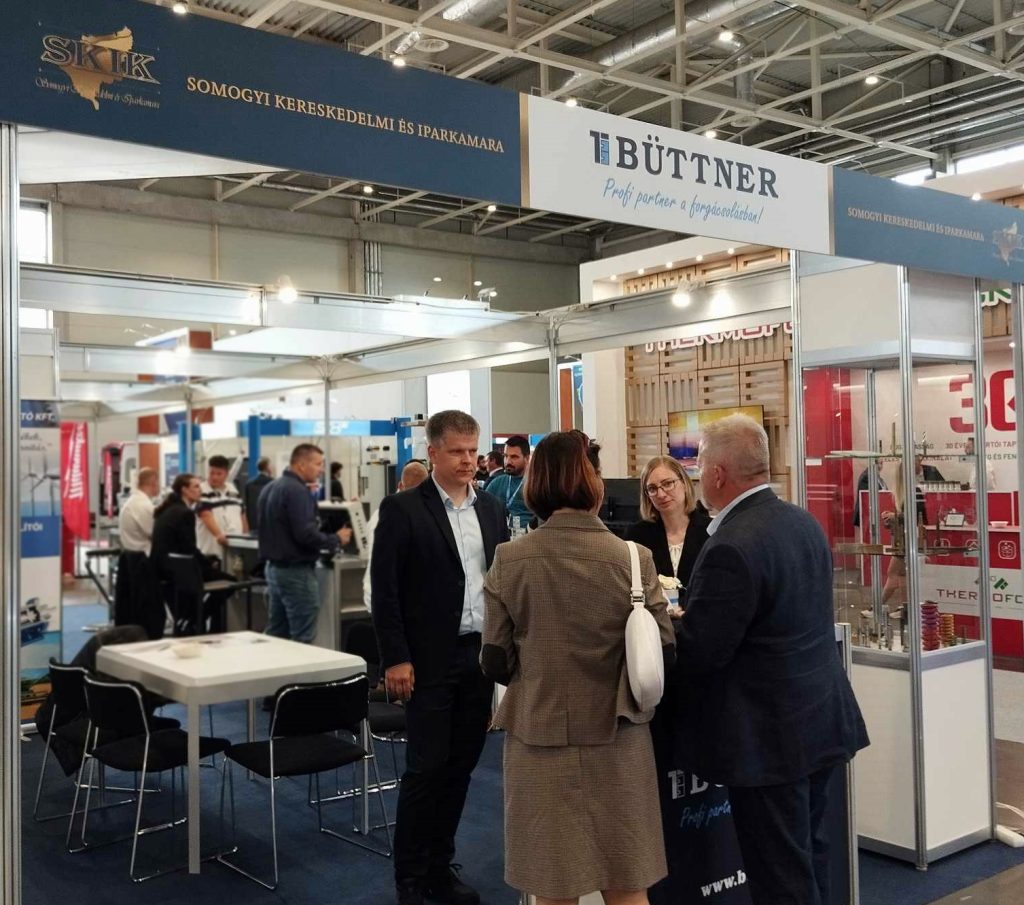
This year, we were present at several major events, including FEHOVA and the Space and Defence Festival in Budapest, as well as the STOM-TOOL Kielce, KPA Ulm, and EnforceTac Nuremberg trade shows. Was there one that stood out in particular?
Among this year’s exhibitions, KPA Ulm and EnforceTac Nuremberg were particularly significant for us.
The KPA exhibition was interesting primarily because innovative German companies, as well as players from the automotive, electronics, and development sectors, were represented there. These sectors are closely linked to precision machining and high-value-added supply chain activities.
It was particularly encouraging to see that German companies are once again looking to the future with greater optimism following the recent difficult economic period. During the discussions, it was clear that many companies are already preparing for their next development and production cycles, which could create opportunities for the Hungarian supplier sector in the long term.
At the same time, EnforceTac Nuremberg was a completely different but equally significant experience. The defense industry has undergone extremely rapid development in recent years, and it is clear that significant developments and investments are expected in this field in Europe. At the exhibition, we encountered numerous new technological solutions, development trends, and potential collaboration opportunities.
Do concrete orders or projects result from participating in exhibitions?
Yes, in several cases, collaborations and orders have resulted directly or indirectly from exhibition contacts. In most cases, however, these are not immediate deals but the result of a longer preparation process.
In the case of larger industrial and defense projects, it often takes months for technical consultations, audits, capacity assessments, and building trust. At the same time, exhibitions serve as an extremely important entry point into these processes.
Could you give an example of a collaboration that began at an exhibition?
We have established several relationships in recent times that began with meetings at trade shows. Due to our confidentiality obligations, we cannot mention specific company names, but we have found—particularly at German industry events—that in-person attendance and direct professional discussions significantly accelerate relationship-building.
In recent months, several German companies have added Büttner Ltd. to their supplier networks. The first step typically involved requests for quotes, which in some cases were followed by test orders.
On average, how much time passes between the initial contact and the actual conclusion of a deal?
This can vary greatly depending on the project size. In the case of a smaller manufacturing order, a trial request for a quote—and subsequently an order—can arrive as early as the week of the trade show. For larger projects or those in the defense industry, however, establishing a partnership can be a process lasting 6 to 12 months.
In our experience, face-to-face meetings significantly speed up this process because trust and a professional relationship are established more quickly.
Does an exhibition appearance yield results in the short or long term?
Definitely in the long term. We don’t treat exhibition presence as a one-time marketing tool, but as an ongoing process. In many cases, the initial meeting is followed months later by further contact, a factory visit, or a request for a quote.
Regular participation strengthens the company’s international reputation and credibility in the long term.
What is the level of interest in your booth in different countries? Do you notice any differences between domestic and international events?
At international exhibitions, we generally see more targeted professional interest. In many cases, visitors arrive with specific manufacturing or development needs.
At domestic events, on the other hand, greater emphasis is placed on following technological trends, industry networking, and opportunities for educational and R&D collaborations.
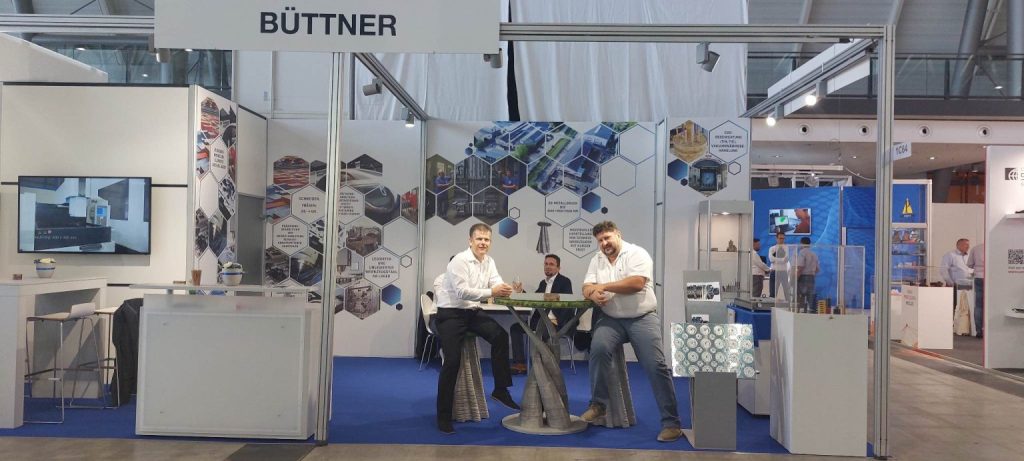
What trends do you currently see in the industry?
The rise of automation, digitalization, and solutions based on artificial intelligence is clearly visible. In addition, manufacturing flexibility, the development of shorter supply chains, and rapid prototyping are becoming increasingly important. From a competitiveness standpoint, these are now decisive factors.
What criteria do you use to decide which trade shows to attend?
First and foremost, we assess how relevant the event is to our strategic industries. Key factors include the quality of the visitor base, international presence, the availability of potential partners and decision-makers, and how well the exhibition aligns with our technological focus areas.
Have you had any memorable or surprising experiences at any of these events?
The KPA exhibition was particularly memorable in this regard. The event itself is still relatively young, yet interest in it is growing spectacularly year after year. A significant portion of the exhibitors come from the Swabian and Bavarian industrial regions, where the manufacturing and engineering background is extremely strong.
We found the perspective that emerged in several conversations particularly interesting: European industry must preserve its own manufacturing know-how, technological competencies, and industrial autonomy in the long term.
There was a clear desire to keep European developments, innovations, and manufacturing capacities in Europe whenever possible. As a Hungarian supplier, it was a positive experience to see that Central European companies are also being assigned an increasingly important role in this mindset.
How important is a physical presence in a digitalized world?
Digitalization is extremely important; most discussions are now conducted on online platforms. However, when it comes to strategic projects and decisions, in-person presence remains crucial.
Trust, professional credibility, and personal relationships are factors that digital tools cannot fully replace.
Trade shows provide an opportunity for our partners to get to know us not only through presentations or online meetings, but also to gain a firsthand understanding of our approach, technological capabilities, and expertise.
In your experience, when is the right time for a company to exhibit at international trade shows?
In our opinion, when a company already has a stable professional foundation, adequate production capacity, and a long-term growth strategy.
An international presence alone is not enough. It is important that the company be able to meet the expectations of international partners in terms of quality, communication, delivery times, and flexibility.
08 June 2026